Blog
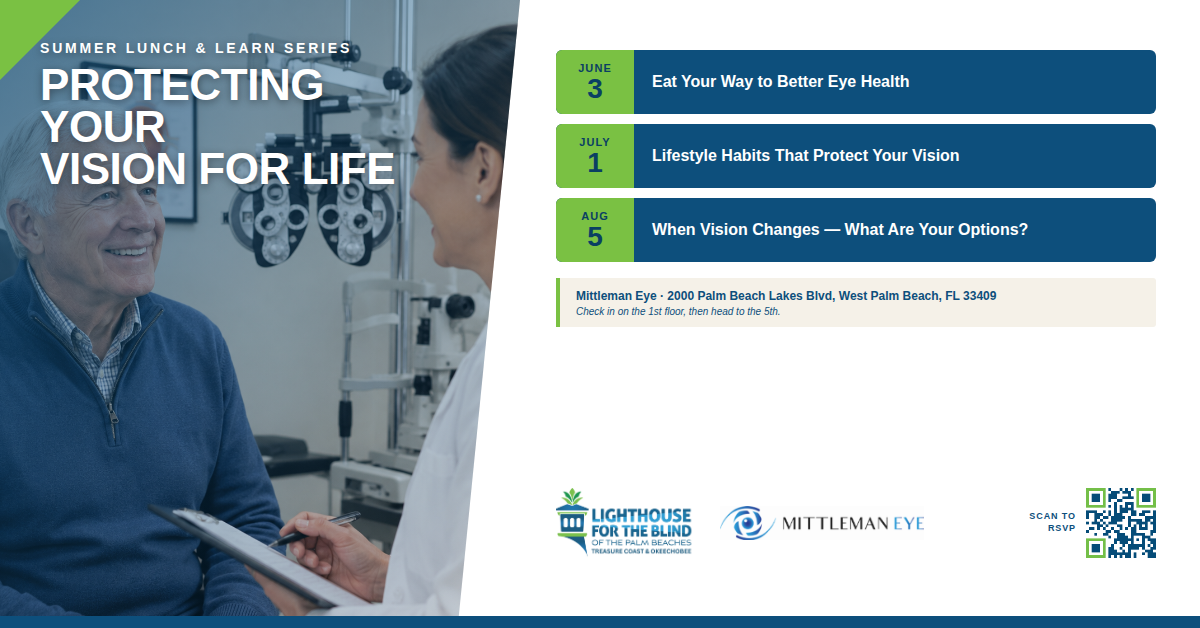
What if your next lunch break came with a side of life-changing health advice? This summer, the Lighthouse for the Blind of the Palm Beaches, Treasure Coast & Okeechobee is hosting a free, three-part Lunch & Learn Series dedicated to something most of us take for granted — our vision. Whether you're managing an existing eye condition, noticing changes in your eyesight, or simply want to be more proactive about your health, this series was made for you. And yes, lunch is included. What Is the Lunch & Learn Series? The Summer Lunch & Learn Series brings together community members, caregivers, and eye health advocates for three interactive sessions, each focused on a different aspect of vision wellness. Each event runs from 11:00 AM to 1:00 PM and is held at Mittleman Eye — giving you direct access to one of the region's premier eye care environments. Every session is designed to be approachable and practical. No medical jargon. No sales pitch. Just real information you can apply to your everyday life, delivered by experts who care about your sight as much as you do. The Sessions June 3 — Eat Your Way to Better Eye Health You've heard that carrots are good for your eyes — but how much do you really know about the connection between what you eat and how well you see? This first session dives into the foods, nutrients, and dietary habits that science has linked to better eye health. From leafy greens rich in lutein to omega-3 fatty acids that support the retina, you'll leave with a clear picture of what to put on your plate — and why it matters for your vision long-term. Great for: Anyone looking to take a proactive, nutrition-based approach to protecting their eyesight. July 1 — Lifestyle Habits That Protect Your Vision Your daily routines — sleep, screen time, sun exposure, exercise — all have a measurable impact on your eye health. But most people don't know where to start. This session explores the lifestyle factors that either safeguard or strain your vision over time. You'll walk away with practical, sustainable habits you can start building right away, whether you're 35 or 75. Great for: People who want to understand how their lifestyle choices affect their long-term vision health. August 5 — When Vision Changes: What Are Your Options? Noticing that your vision isn't what it used to be can feel frightening. But it doesn't have to. This final session takes an honest, compassionate look at what happens when vision changes — and what your options are. From early intervention strategies to the wide range of assistive tools and support services available, this session is about empowerment, not alarm. Great for: Adults experiencing vision changes, family members, and caregivers who want to understand what comes next. Where to Go All three sessions are held at Mittleman Eye , located in the Palm Beaches area. Sessions take place on the 5th floor — when you arrive, check in at the 1st floor reception before heading up. Staff will be there to welcome you. Who Should Attend? This series is open to everyone in the community. You don't need to be a current Lighthouse client or have a diagnosed vision condition to attend. These events are for: Adults who want to be proactive about their eye health Seniors experiencing age-related vision changes Caregivers supporting a loved one with low vision or vision loss Anyone curious about how lifestyle and nutrition affect long-term sight Why the Lighthouse? The Lighthouse for the Blind of the Palm Beaches, Treasure Coast & Okeechobee has been a trusted resource for people living with vision loss and visual impairment across South Florida for decades. Through education, advocacy, and direct services, the Lighthouse empowers individuals to live independently and fully — and that mission starts with community events exactly like this one. Reserve Your Spot Space at each session is limited, so we encourage you to sign up in advance. You can attend one session, two, or all three — each stands on its own. Register now and secure your seat for the session (or sessions) that speak to you most. Lunch is provided, and there's no cost to attend. We'll see you there. The Lighthouse for the Blind of the Palm Beaches, Treasure Coast & Okeechobee · Hosted at Mittleman Eye · 11:00 AM – 1:00 PM
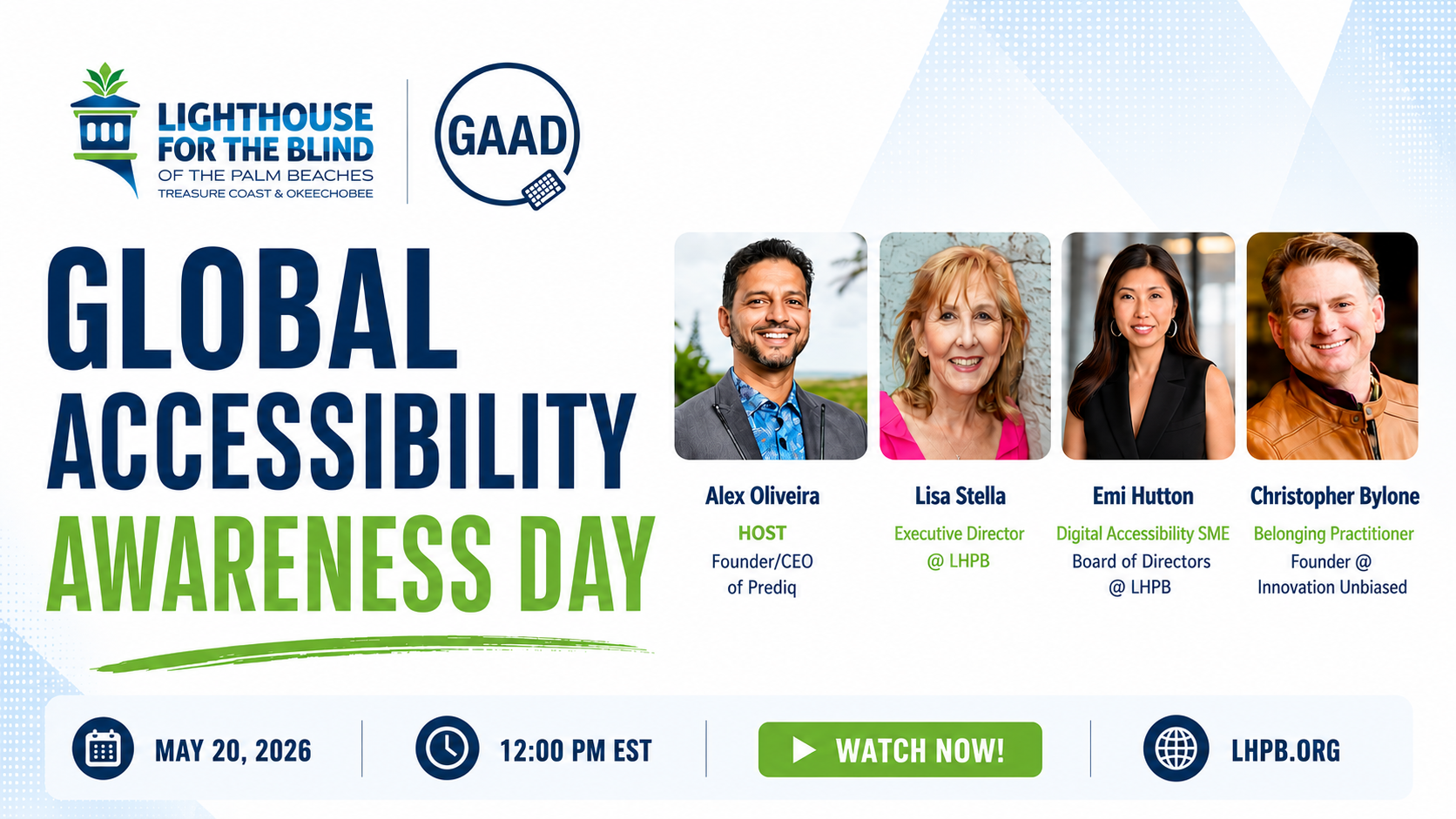
Last Thursday, May 21, marked the 15th annual Global Accessibility Awareness Day — a worldwide moment to get people talking, thinking, and learning about digital inclusion. At Lighthouse for the Blind of the Palm Beaches, Treasure Coast & Okeechobee, we marked the occasion with an executive strategic briefing: Where Access Changes. The conversation brought together leaders who don't just talk about accessibility — they build it, fight for it, and live it. The Panel Lisa Stella , our Executive Director, who has spent her career advancing independence for people who are blind or visually impaired Emi Hutton , Digital Accessibility Subject Matter Expert and a member of our Board of Directors Christopher Bylone , Belonging Practitioner and Founder of Innovation Unbiased Alex Oliveira , Founder and CEO of Prediq , who hosted the discussion Together, they tackled something uncomfortable but necessary: why, fifteen years into GAAD, the digital world still leaves so many people behind. Five Things That Stuck With Us 1. The scale of the problem is bigger than most leaders realize. 1 billion people worldwide live with a disability. That's roughly one in six of us. And according to the WebAIM Million Report, 98.1% of the world's top one million home pages have at least one accessibility failure — with an average of nearly 61 errors per page. This isn't a niche concern. It's a default condition of today's web. 2. The clock is ticking on compliance. The Department of Justice's Final Rule takes effect on April 26, 2027, requiring WCAG 2.1 AA compliance across digital properties. As the panel pointed out, reactive fixes cost roughly 10 times more than proactive design. Organizations waiting for the deadline are setting themselves up for both higher costs and higher legal exposure. 3. Accessibility is a market opportunity, not just a risk. People with disabilities control an estimated $1.9 trillion in annual disposable income globally (Return on Disability Group, 2025). When you design for accessibility, you're not just avoiding lawsuits — you're opening your product to a massive and historically underserved market. 4. The curb-cut effect is real. Curb cuts were built for wheelchair users. They ended up helping parents with strollers, travelers with rolling luggage, and delivery workers with carts. Digital accessibility works the same way. Captions help people in noisy environments. High-contrast design helps anyone reading on a phone in sunlight. Voice navigation helps hands-free mobile users. Designing for the margins improves the experience for everyone. 5. Lived experience belongs in the room. One of the panel's strongest themes: you cannot design accessible products without people with disabilities at the table — not as test subjects, but as colleagues, designers, and decision-makers. Authentic feedback from people who navigate digital barriers every day is the single best defense against both poor design and litigation. Why This Matters Here Since 1946, Lighthouse for the Blind has helped people who are blind or visually impaired reach their highest level of independence. For 80 years, that mission has evolved alongside the world it serves — from teaching daily living skills to advocating for the digital environments where so much of modern life now happens. Accessibility isn't a checkbox. It's a culture. And cultures don't change in a single day — not even on GAAD. Watch the Webinar
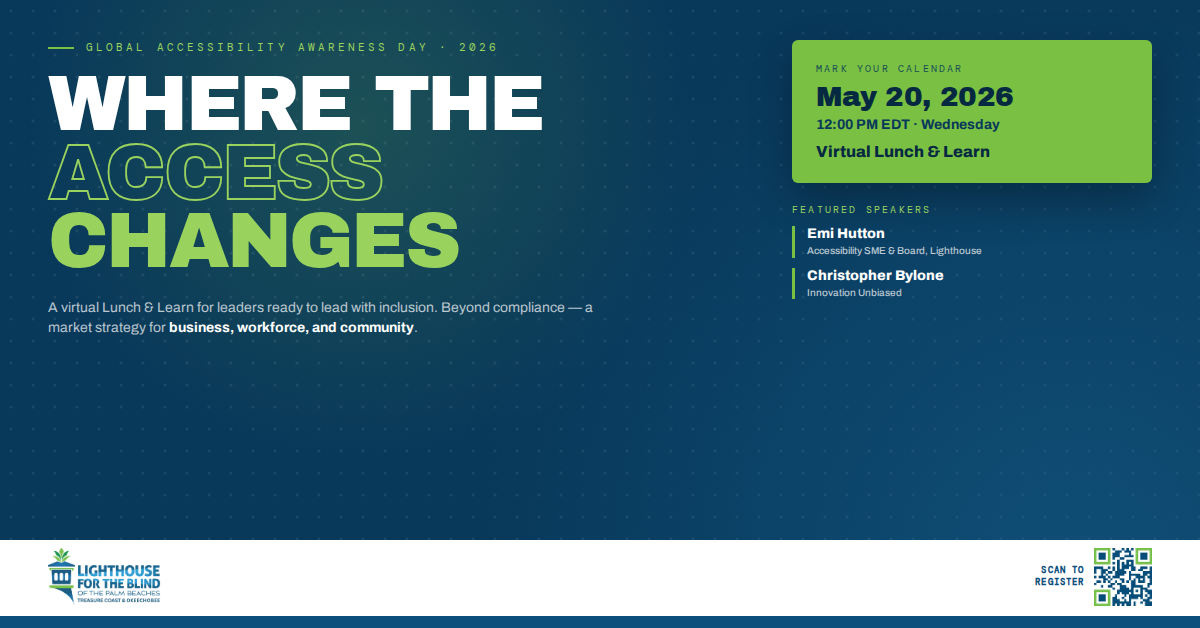
Wednesday, May 20, 2026 | 12:00 PM Noon | Free Virtual Webinar Presented by Lighthouse for the Blind of the Palm Beaches Global Accessibility Awareness Day falls on May 21st this year, and we are kicking off the conversation a day early with a webinar built for leaders who are ready to stop checking boxes and start building strategy. On May 20th at noon, join Lighthouse for the Blind of the Palm Beaches for a free virtual Lunch and Learn: The Strategic Edge: Beyond Compliance . Presented in partnership with Innovation Unbiased, this session brings together thought leaders who are redefining what accessibility means for business, workforce, and community. What This Session Is About Most conversations about accessibility start with legal risk. This one starts with opportunity. The global disability market represents $13 trillion in spending power. ADA Title II and Title III updates are reshaping compliance expectations for private businesses, government agencies, and schools. And organizations that treat accessibility as a dynamic operational commitment rather than a one-time fix are pulling ahead in talent, reputation, and market reach. This webinar is designed to give C-Suite leaders, HR professionals, and community champions a practical blueprint for leading with inclusion. What You Will Walk Away With The session covers six executive pillars: The ADA Mandate Roadmap -- A practical breakdown of recent ADA updates and how to move your organization from "legal fear" to strategic readiness. The Talent Stack and Workforce Integration -- A look at how screen readers, AI-driven note-takers, and other professional tools enable high-performers with disabilities to exceed traditional productivity benchmarks. The "Curb-Cut" Market Multiplier -- How designing for disability creates better products for everyone, and how to capture both the disability market and the growing "Silver Economy." The Lifecycle of Progress -- Why accessibility requires ongoing operational commitment and what that looks like in practice. User-Led Accommodations -- How shifting HR protocols toward collaborative expertise, and partnering with the Division of Blind Services, produces better outcomes while reducing corporate spend. The Power of Community Engagement -- How the Lighthouse network can drive sponsorship, high-level volunteerism, employee engagement, and measurable ESG impact for your organization. Meet the Speakers
As digital spaces become central to how we work, shop, learn, and connect, website accessibility is no longer optional, it’s essential. In a recent webinar hosted by the Lighthouse for the Blind of the Palm Beaches, Treasure Coast & Okeechobee, a panel of accessibility experts came together to break down the latest updates to ADA web accessibility requirements and what they mean for organizations today. Featuring insights from Lisa Stella (Lighthouse), Alex Oliveira (Prediq), Sapir Yarden and Michael Hingson (accessiBe), and accessibility advocate Emi Hutton, the session provided a clear look at the current landscape, the risks of non-compliance, and practical steps forward. Why Website Accessibility Matters More Than Ever For individuals who are blind or visually impaired, an inaccessible website can create real barriers, preventing access to basic information, services, and opportunities. Accessibility is not just about compliance; it’s about inclusion. Organizations of all types, businesses, nonprofits, schools, and government entities, are increasingly expected to ensure their websites can be used by everyone, including those who rely on assistive technologies like screen readers or voice navigation.
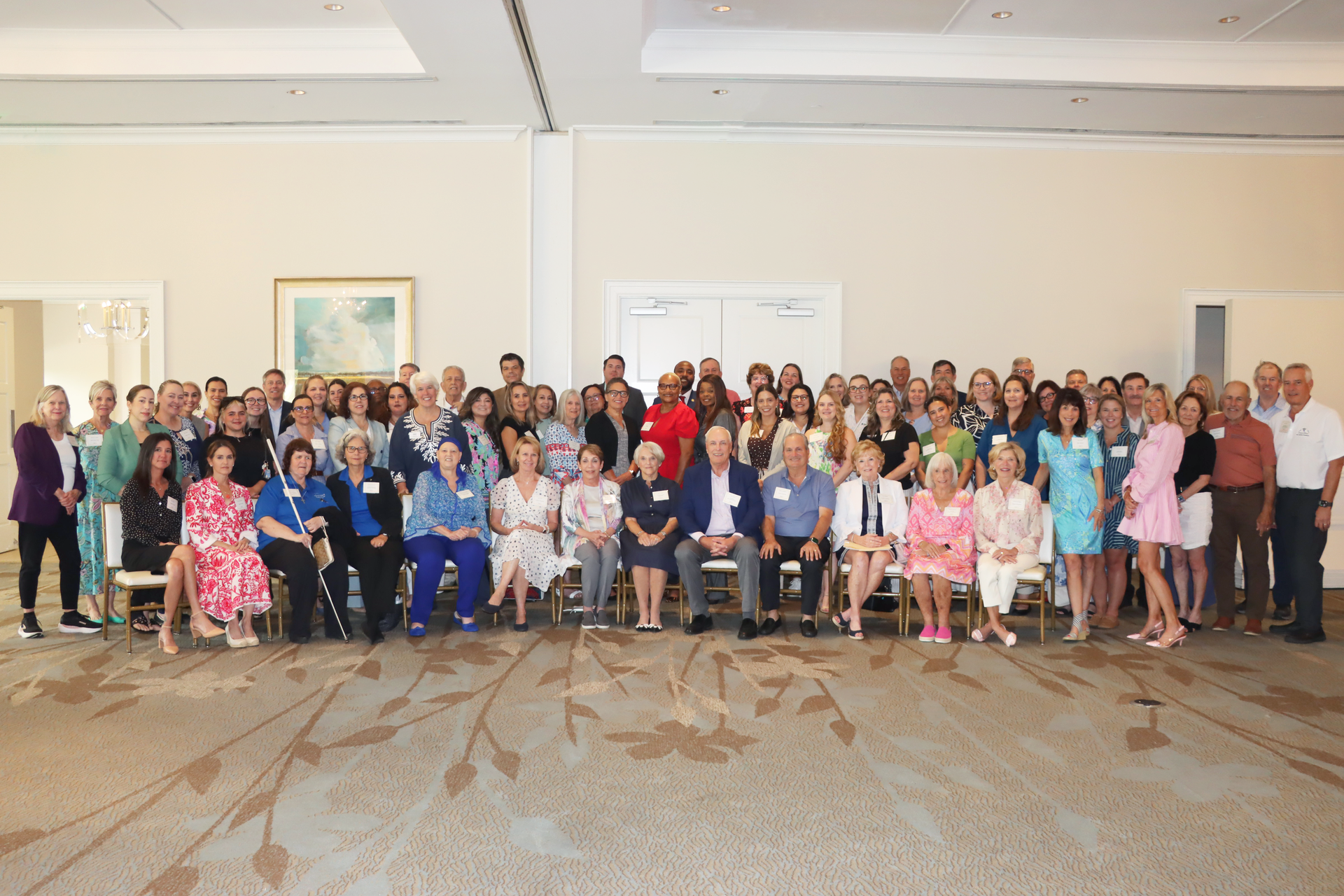
We have wonderful news to share with our Palm Beach County community. At a recent breakfast ceremony hosted by the Ibis Charities Foundation , Lighthouse for the Blind of the Palm Beaches was awarded a $20,000 grant — a gift that will shine directly into the lives of the children we serve every day. Our entire team was moved by this incredible show of support. This investment in our mission means more resources, more opportunities, and more independence for young people living with visual impairments across the region.
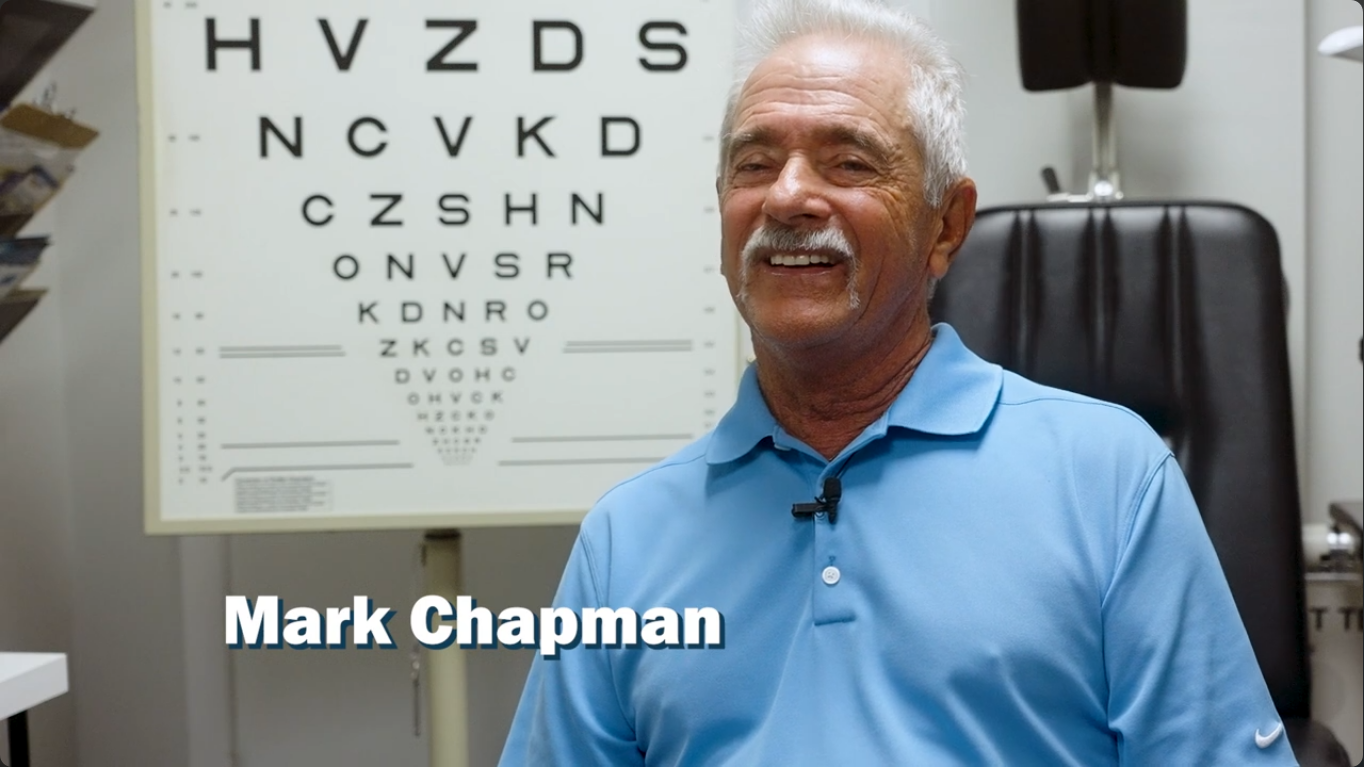
Mark Chapman lost his vision overnight and thought his life was over. At the Lighthouse for the Blind of the Palm Beaches, he learned to live independently again and says he is happier now than when he could see. Read his story.
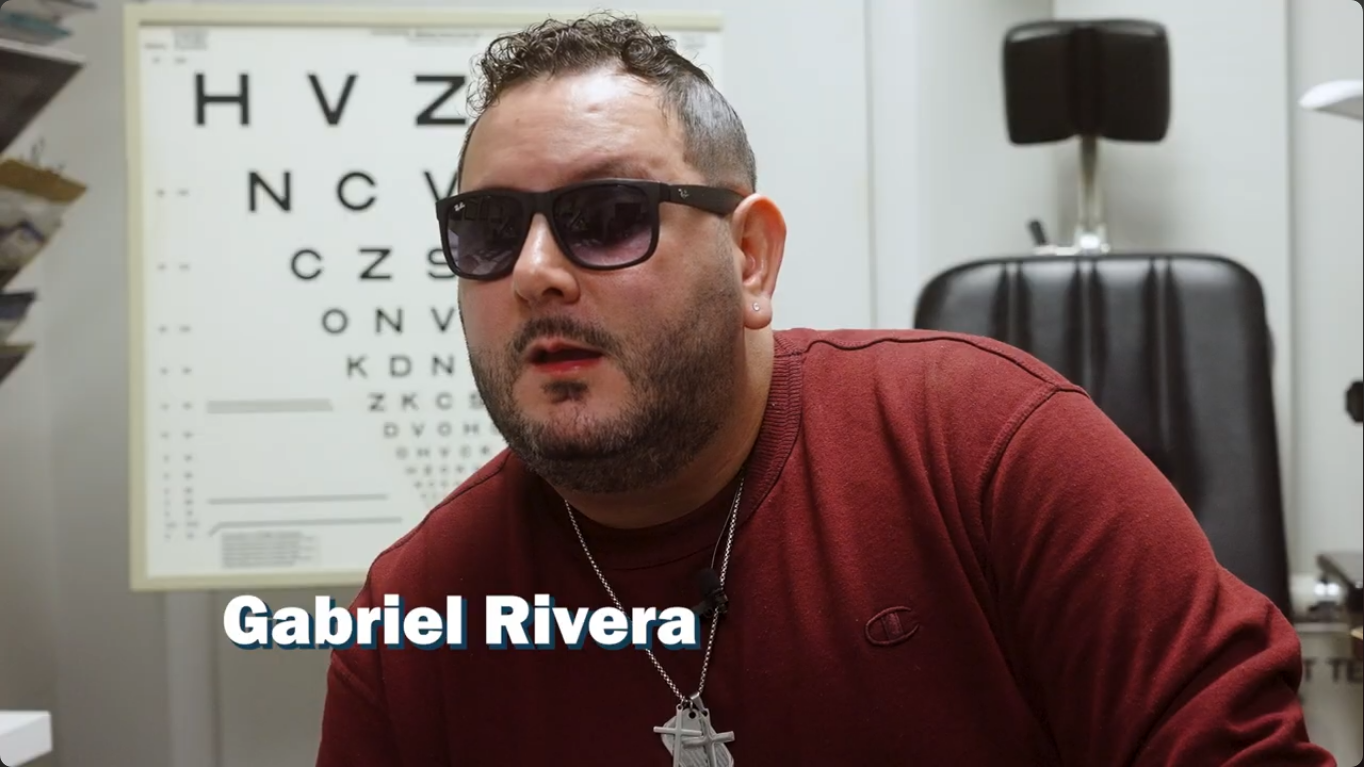
Gabriel survived a violent attack that left him with a 10% chance of living. After losing his sight, he found The Lighthouse and discovered a vision more powerful than anything he had before. Read his story.
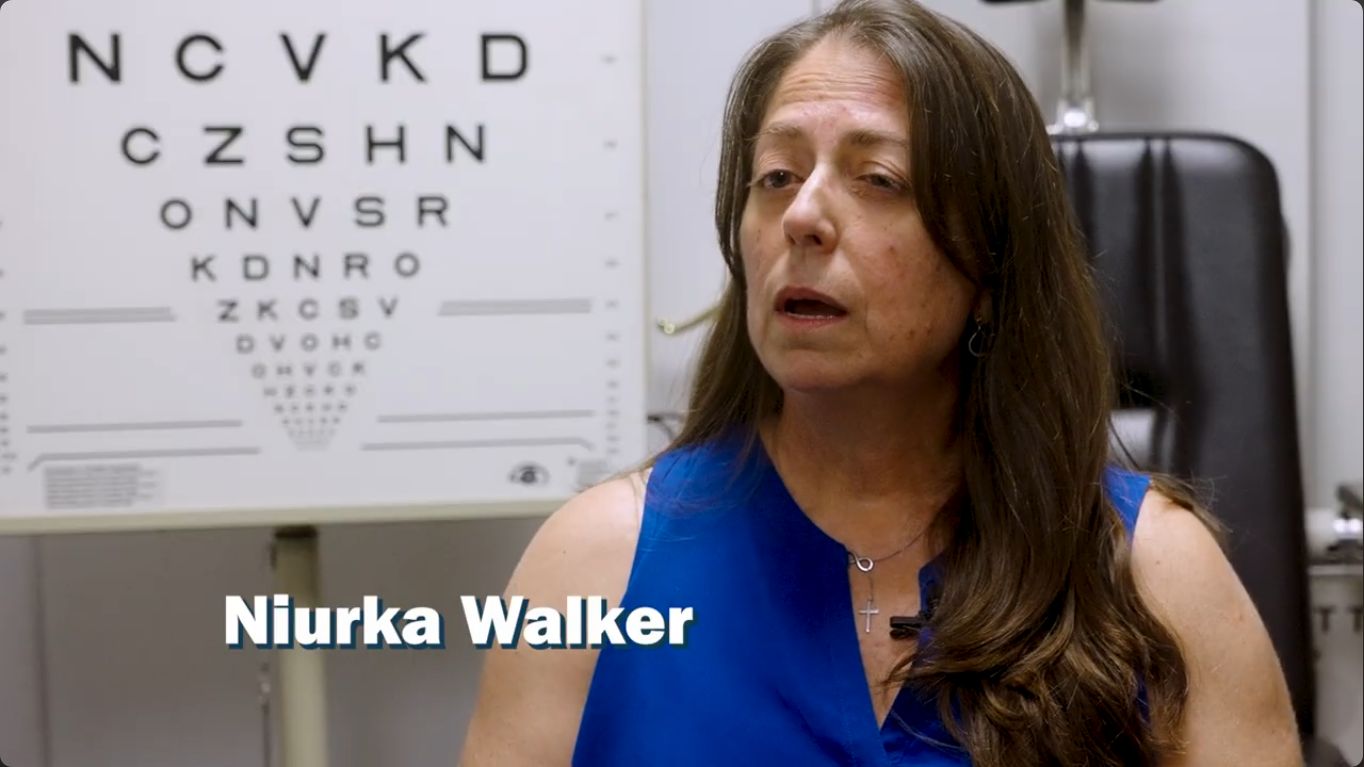
Niurka Walker went from driving herself to the eye doctor to losing her sight the same day. At the Lighthouse for the Blind of the Palm Beaches, she found the independence and tools to go back to college and rebuild her life.
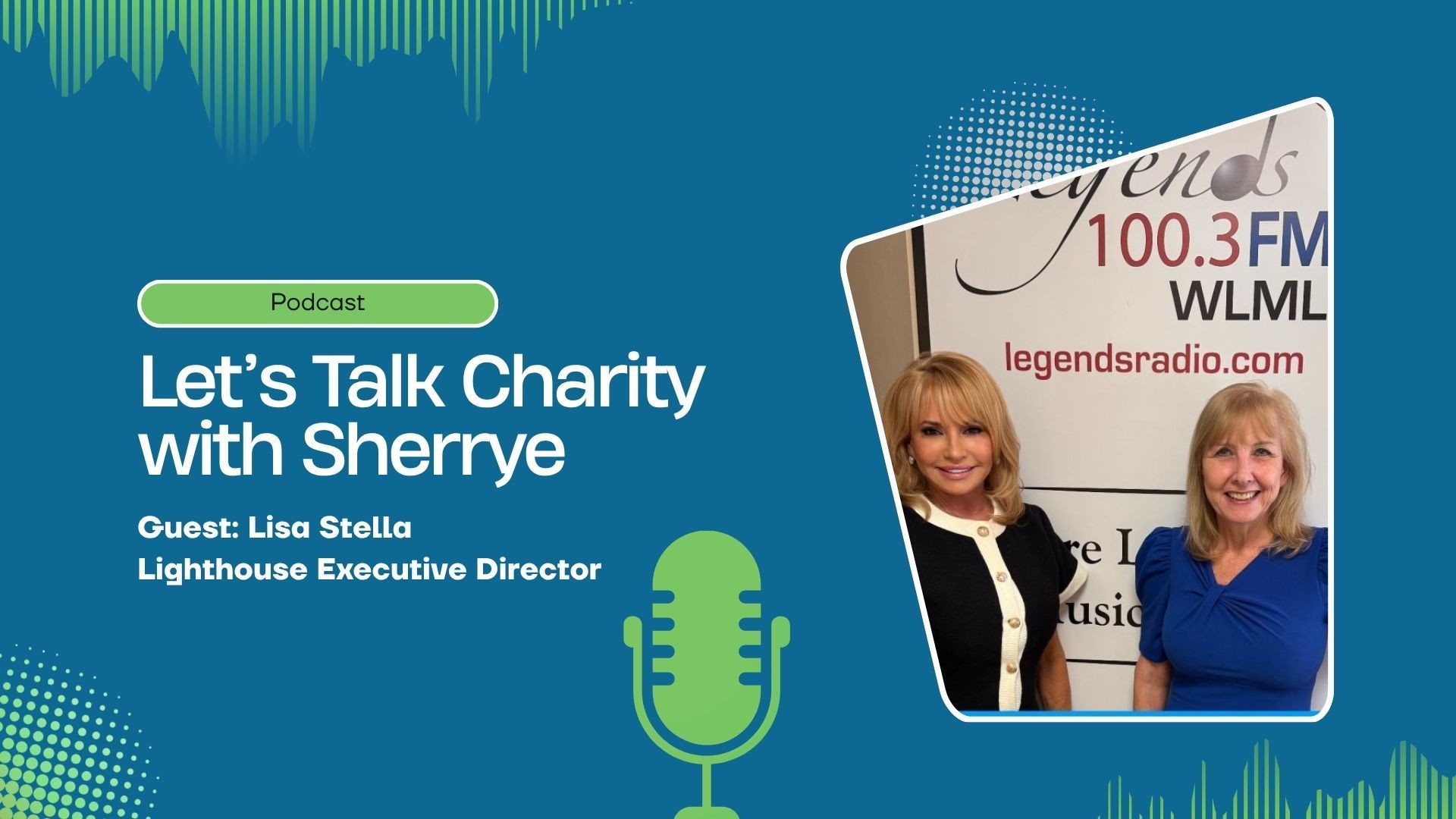
The Lighthouse for the Blind of the Palm Beaches, Treasure Coast & Okeechobee was recently featured on Let’s Talk Charity with Sherry , where Executive Director Lisa Stella joined the program to discuss the growing need for vision services across our region and the life-changing work happening every day through Lighthouse programs. During the conversation, Lisa shared how the Lighthouse has been serving the community for 80 years , helping individuals who are blind or visually impaired build independence, confidence, and opportunity from childhood through adulthood.
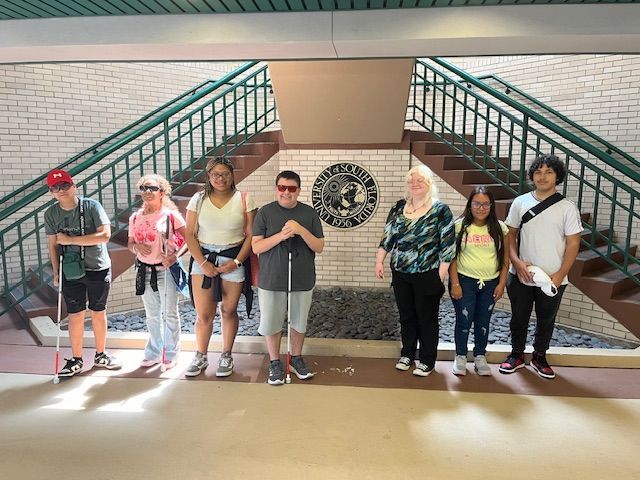
The teenage years are a time of growth, self-discovery, and increasing independence. For teens who are blind or visually impaired, that journey can come with unique challenges—but with the right support, it can also be filled with confidence, capability, and opportunity. At the Lighthouse for the Blind of the Palm Beaches, Treasure Coast & Okeechobee, transition programs are designed to help teens build the skills they need to move successfully into adulthood—whether that means continuing their education, entering the workforce, or living more independently. Why Independence Matters Independence looks different for every teen, but the goal is the same: to build the skills and confidence needed to navigate the world safely and successfully. For teens with vision loss, this often means learning alternative techniques, using assistive technology, and gaining hands-on experience in real-life situations. Developing independence early helps teens feel more prepared for the responsibilities that come with adulthood—from managing daily routines to making informed decisions about their future.
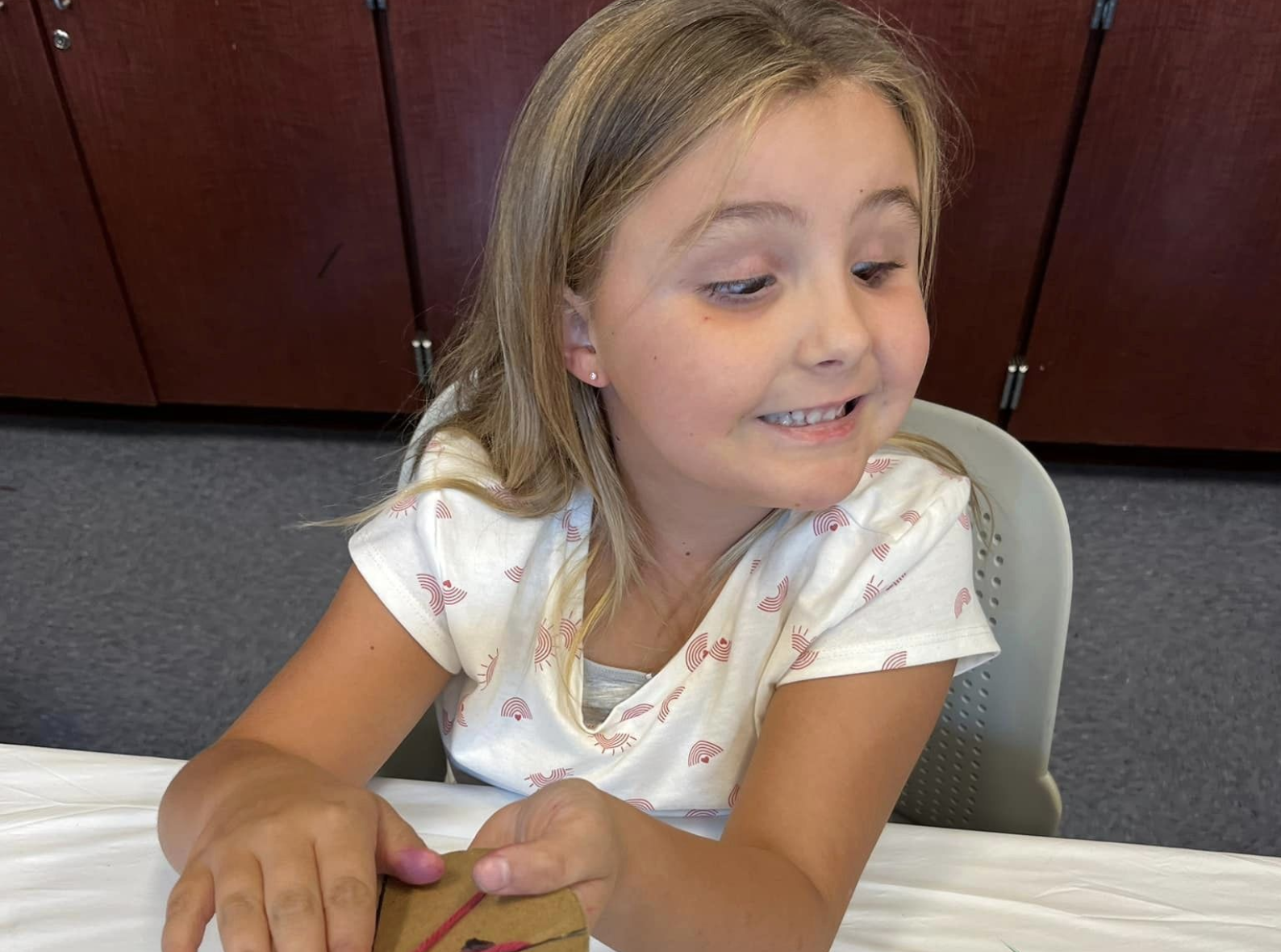
Learning that your baby has a visual impairment can feel overwhelming. You may have a hundred questions and not know where to begin. You might wonder whether your child will reach the same milestones as other babies, what kind of help is available, or whether you are doing everything you can. The good news is that you are not alone, and early intervention — the services and support available during the first years of life — can make an extraordinary difference. At Lighthouse for the Blind of the Palm Beaches, Treasure Coast & Okeechobee , we walk alongside families from the very beginning. This guide is designed to give you a realistic, encouraging picture of what the first year looks like when you have early support in your corner. Why the First Year Matters So Much The first twelve months of a child’s life are a period of remarkable neurological growth. The brain is forming connections at a pace it will never match again, and sensory experiences — touch, sound, movement, and yes, vision — drive that development. When vision is limited or absent, babies can absolutely thrive, but they benefit from intentional strategies that help them explore and understand the world in other ways. Research consistently shows that babies who receive early intervention services in the first months of life have better developmental outcomes than those who start later. This is not a reason for alarm if your child’s diagnosis came later — the brain remains remarkably adaptable. But it is a reason to act quickly once you know, and to feel confident that every step you take right now matters deeply. Getting Connected to Services In Florida, babies and toddlers from birth through age 5 who have visual challenges are eligible for services through the Blind Babies Program. These services are family-centered, often provided in your home, and designed to fit into your daily routine. Your first call should be to your child’s pediatrician or ophthalmologist if you haven’t already received a referral. You can also contact an organization like Lighthouse directly — we can help connect you with the right resources and begin building a support plan alongside your family. You do not need to wait for a formal diagnosis to reach out. Who Will Be Part of Your Team One of the first things families often notice about early intervention is that it involves a team, not just one provider. Depending on your child’s needs, you may work with some or all of the following specialists: Teacher of the Visually Impaired (TVI): A TVI is specially trained in the developmental and educational needs of children with vision loss. They will guide you in activities that build your baby’s skills and help you understand how your child is taking in the world. Orientation & Mobility (O&M) Specialist: Even for infants, O&M specialists begin laying the groundwork for safe, independent movement by encouraging body awareness and spatial understanding. If your child is receiving additional services, such as occupational therapy, speech therapy, physical therapy etc., we will collaborate with your child's team to make sure we are working together to meet the child's needs. What Sessions Actually Look Like Many parents imagine early intervention as formal therapy sessions with equipment and clinical settings. In reality, early intervention for infants is woven into everyday life. A specialist might sit with you on the floor while your baby is having tummy time, guiding you in how to use your voice, texture, and contrast to encourage your child to lift their head and reach. They might observe bath time and suggest ways to build body awareness through touch and water play. The goal is not to hand your baby off to an expert — it is to empower you as the parent to be your child’s best teacher. You are with your baby every day. The specialist is your coach, helping you see what your baby needs and building your confidence to provide it. Milestones to Watch For (and How They May Look Different) Developmental milestones for visually impaired babies often happen on a different timeline or in a different sequence than for sighted babies. This is not a sign of a problem — it is simply a reflection of how your child is learning about the world. Here are some things to know: Smiling: Sighted babies often smile in response to seeing a face. Visually impaired babies may smile in response to a familiar voice or touch. If you are not getting the visual smiles you expected, try talking and singing more — you may find your baby lights up at the sound of you. Reaching: Sighted babies often reach toward objects they can see. Visually impaired babies may not reach until they learn to associate sound with an object’s location. A specialist can work with you on “sound localization,” helping your baby understand that a rattle nearby is something worth reaching for. Crawling and Walking: Without the motivation of seeing something across the room, visually impaired babies sometimes have less incentive to move. Early O&M strategies build that motivation through tactile exploration and safe, encouraging environments. Language: Many visually impaired children develop strong language skills early, as they rely heavily on listening. Talk to your baby constantly — describe what you are doing, what they are touching, and where you are going. Taking Care of Yourself Parenting any baby is hard work. Parenting a baby with a visual impairment adds a layer of research, appointments, emotional adjustment, and advocacy that most parents never anticipated. It is completely normal to feel grief, fear, frustration, and love all at the same time. Finding other parents who have been in your shoes is one of the most powerful things you can do. Ask your early intervention team about parent support groups. Organizations like Lighthouse often host family events where you can connect with others navigating similar journeys. You will likely find that the parents a year or two ahead of you on this path become some of your most valuable sources of hope and practical advice. Lighthouse Is Here From Day One At Lighthouse for the Blind of the Palm Beaches, Treasure Coast & Okeechobee, we have been supporting children with visual impairments and their families for 80 years. Our Children’s Program serves babies, infants, and children from birth through age 13 with individualized services designed to help each child reach their full potential. We know that the first phone call can feel like the hardest one to make. You might not know exactly what you need yet, and that is okay. We will figure it out together. Whether you are looking for direct services, guidance on navigating the school system, or simply someone to talk to who understands, we are here. Reach out to us today at (561) 586-5600 or visit lhpb.org to submit a request for help. Your child’s first year holds more possibilities than you may realize right now — and you do not have to figure it out alone.
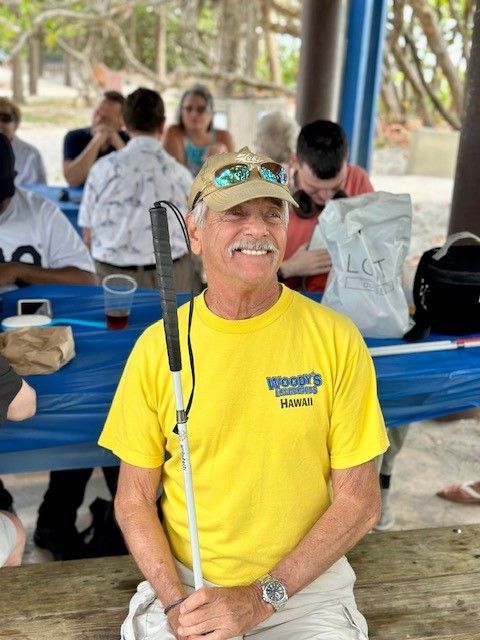
Orientation & Mobility (O&M) training is an essential service for individuals who are blind or visually impaired. It focuses on helping people move safely, confidently, and independently through their homes, communities, and everyday environments. At the Lighthouse for the Blind of the Palm Beaches, Treasure Coast, & Okeechobee, O&M training is designed to meet each person where they are and support meaningful, real-world independence. What Is Orientation & Mobility Training? Orientation refers to understanding where you are in relation to your surroundings. Mobility focuses on moving safely from one place to another. Together, O&M training teaches practical skills that help individuals navigate daily life with confidence. Training may include learning how to: Travel safely indoors and outdoors Cross streets and navigate intersections Use public transportation or ride services Build mental maps of familiar routes Use a white cane or other mobility tools Apply sensory cues such as sound, texture, and spatial awareness O&M training is always personalized. An O&M Specialist works one-on-one with each client to identify goals, address challenges, and build skills at a comfortable pace.
